Raising a Bilingual Child: Simple Routines That Work
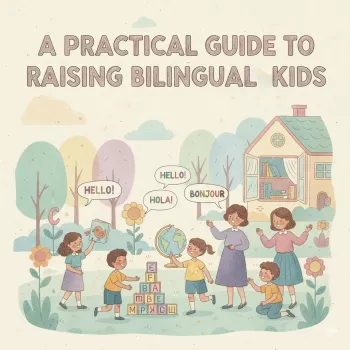
How to raise a bilingual child in a bilingual household?
Raising a bilingual child in a bilingual household works best when each language has a clear, consistent place in daily life. Start by deciding how your family will use each language: one parent, one language (OPOL); a home language versus a community language; or set times/activities for each language (mealtimes, bedtime stories, errands). Consistency matters more than the “perfect” method, because kids learn fastest when they can predict which language comes next.
Build routines that make both languages feel useful. Narrate everyday tasks (“Let’s wash hands,” “Now we’re putting on shoes”), label objects around the home, and keep a steady rotation of songs, books, and games in both languages. If one language is weaker, increase exposure through playdates, phone calls with relatives, library story times, or a caregiver who speaks that language.
Keep the emotional tone positive—especially when your child mixes languages. Code-switching is normal and often a sign of strong communication skills. Instead of correcting harshly, model the phrase naturally: if your child says, “I want agua,” you can respond, “You want water—here’s some water.” That gives the right vocabulary without turning conversation into a test.
Watch for the “minority language” slipping away once school starts. Protect it by making it the language of connection: bedtime chats, weekend traditions, cooking together, and family media. If reading is difficult at first, use audiobooks and picture books to keep it enjoyable while skills grow.
For a deeper, step-by-step approach—including common challenges and practical routines—visit How to Raise a Bilingual Child in a Bilingual Household.
For Raising a Bilingual Child: Simple Routines That Work, the best answer depends on fit, material, care instructions, and how the product will be used day to day.
FAQ
What if my child refuses to speak one language?
Reduce pressure and increase need and motivation: create situations where that language is the easiest way to connect (special games, one-on-one outings, calls with relatives). Model short, repeatable phrases and celebrate attempts rather than accuracy.









Leave a comment